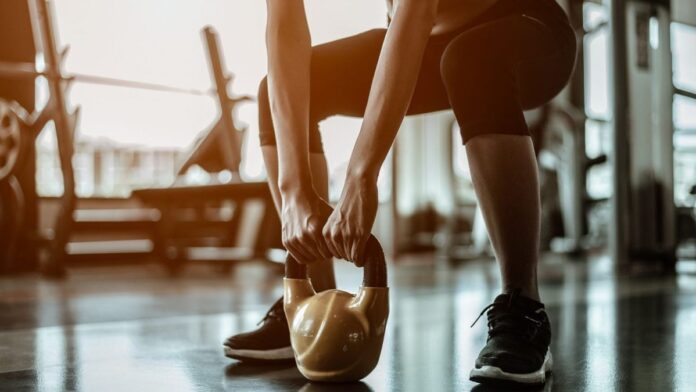
Kettlebells are one of the most versatile pieces of fitness equipment you can own. Compact, affordable, and effective, they allow you to train your entire body without needing a gym membership. Unlike dumbbells, kettlebells have a unique shape that challenges your grip and stabilizing muscles, making even simple movements more effective. For beginners, the key is to start with easy exercises that build a solid foundation. (Image: Canva)
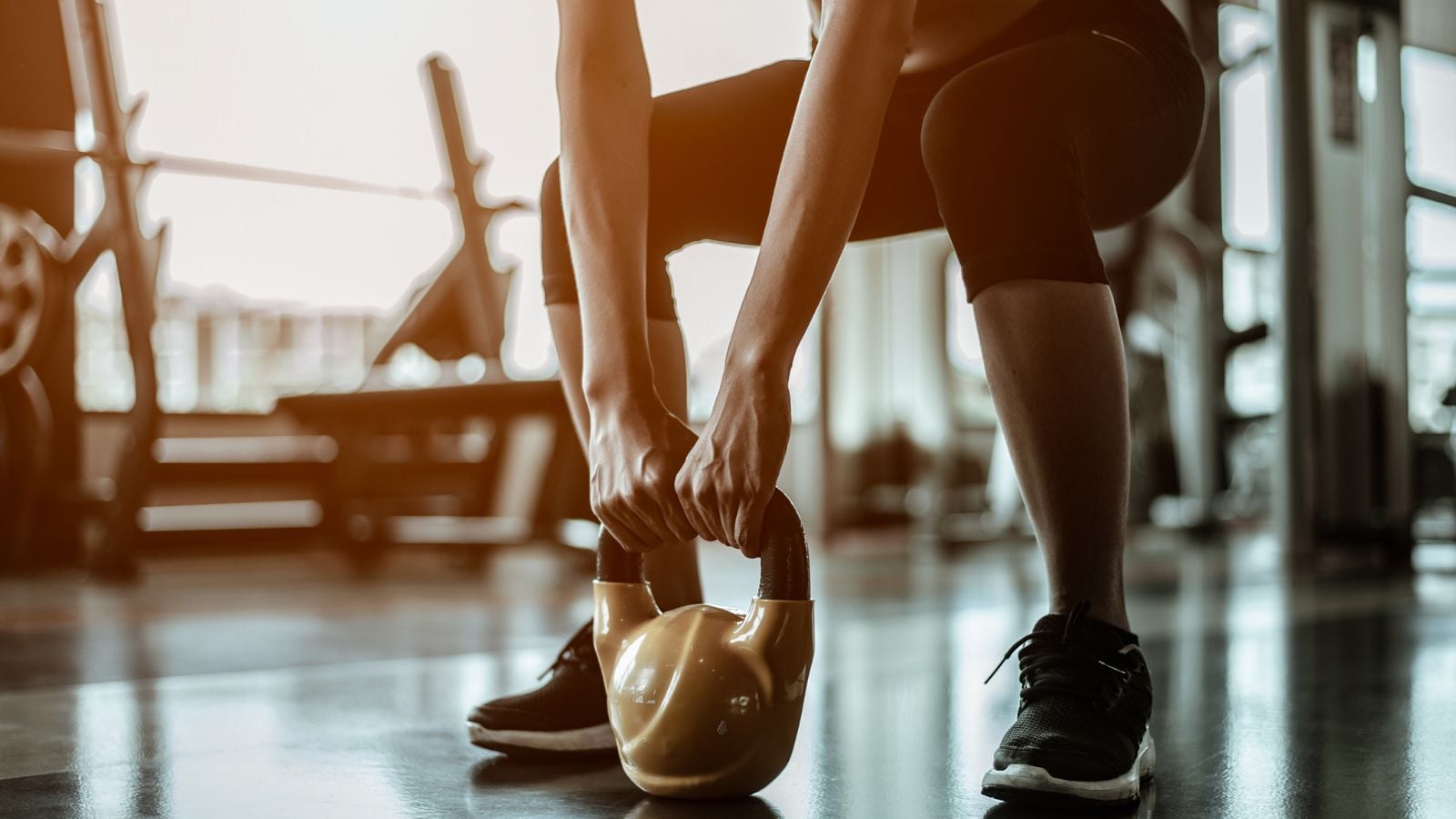
Kettlebell Deadlift: The kettlebell deadlift is a fundamental move that strengthens your hamstrings, glutes, and lower back. To perform it, place the kettlebell between your feet, hinge at the hips with a straight back, and grip the handle firmly. Push through your heels to stand tall, then lower back down with control. This exercise builds posterior chain strength and teaches proper hip hinge mechanics, which are essential for safe lifting. (Image: Canva)
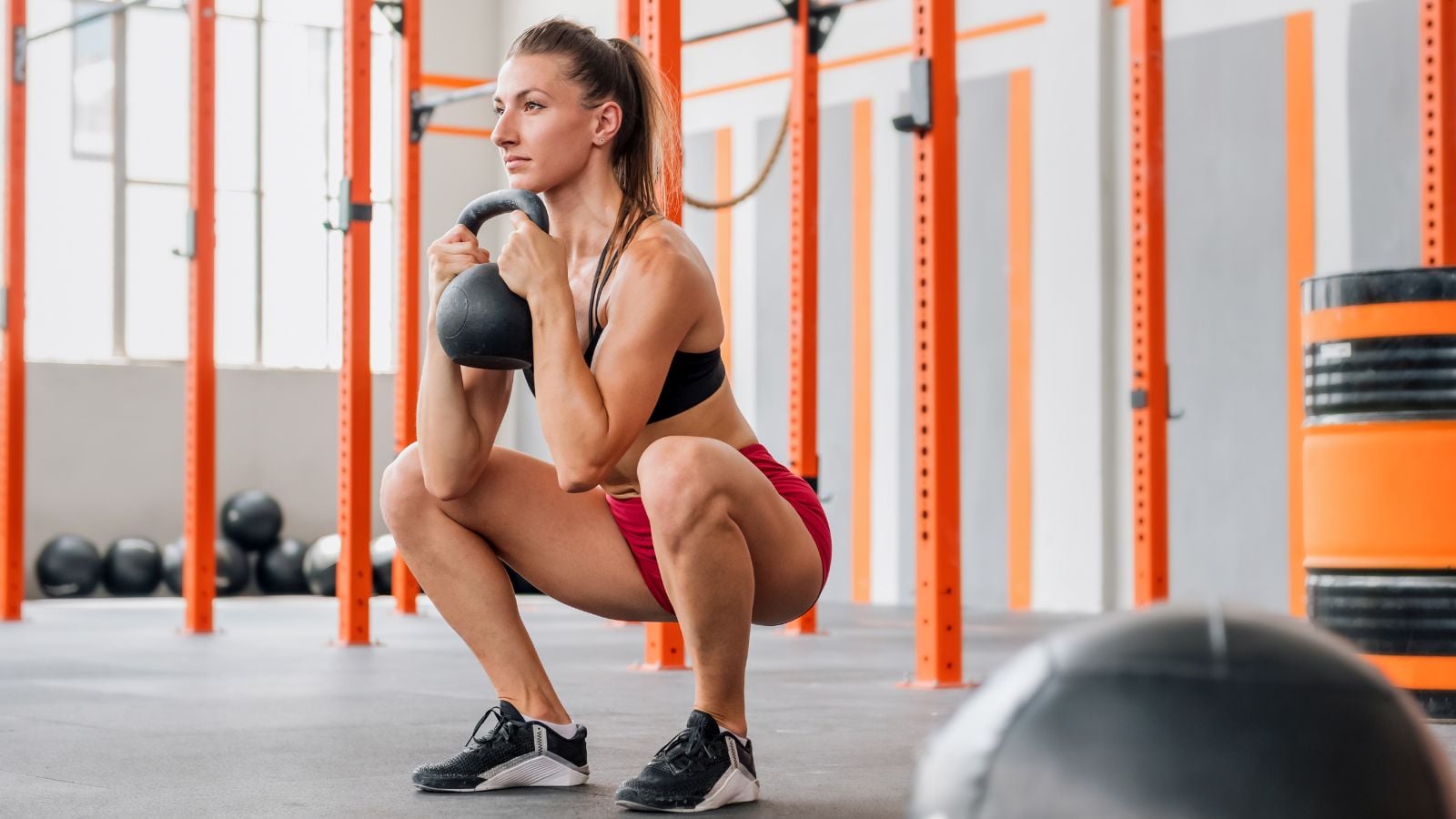
Kettlebell Goblet Squat: The goblet squat is a simple yet powerful way to train your lower body. Hold the kettlebell close to your chest with both hands, squat down by pushing your hips back, and keep your chest upright. As you rise, drive through your heels to return to standing. This move strengthens your quads, glutes, and core while improving squat form, making it a great beginner exercise. (Image: Canva)
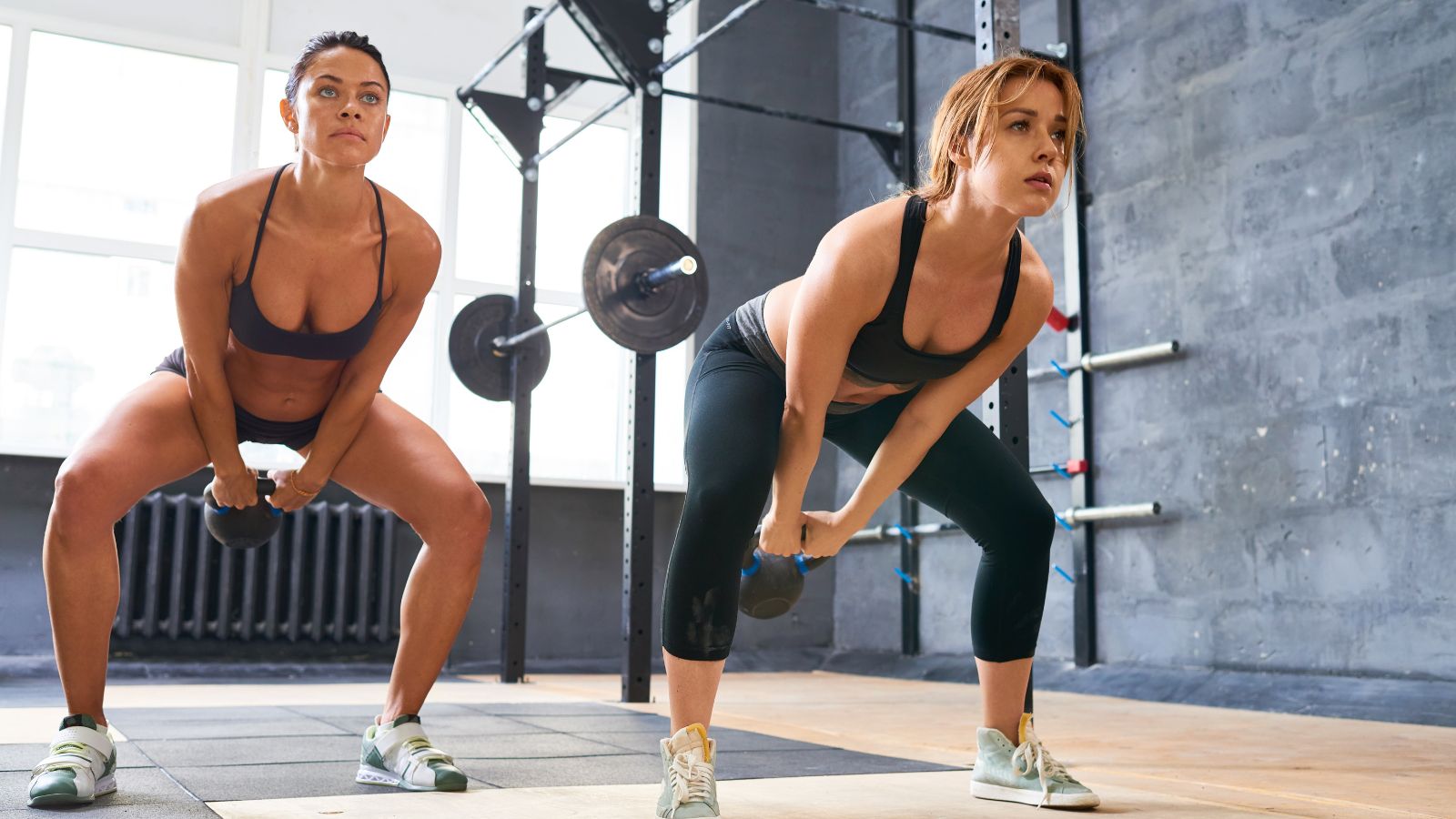
Kettlebell Swing: Perhaps the most iconic kettlebell exercise, the swing combines strength and cardio in one fluid motion. Start with the kettlebell on the floor, hinge at the hips, and swing it between your legs. Drive your hips forward explosively to propel the kettlebell up to chest height. The swing builds hip power, burns calories, and improves conditioning, making it a staple in any kettlebell routine. (Image: Canva)
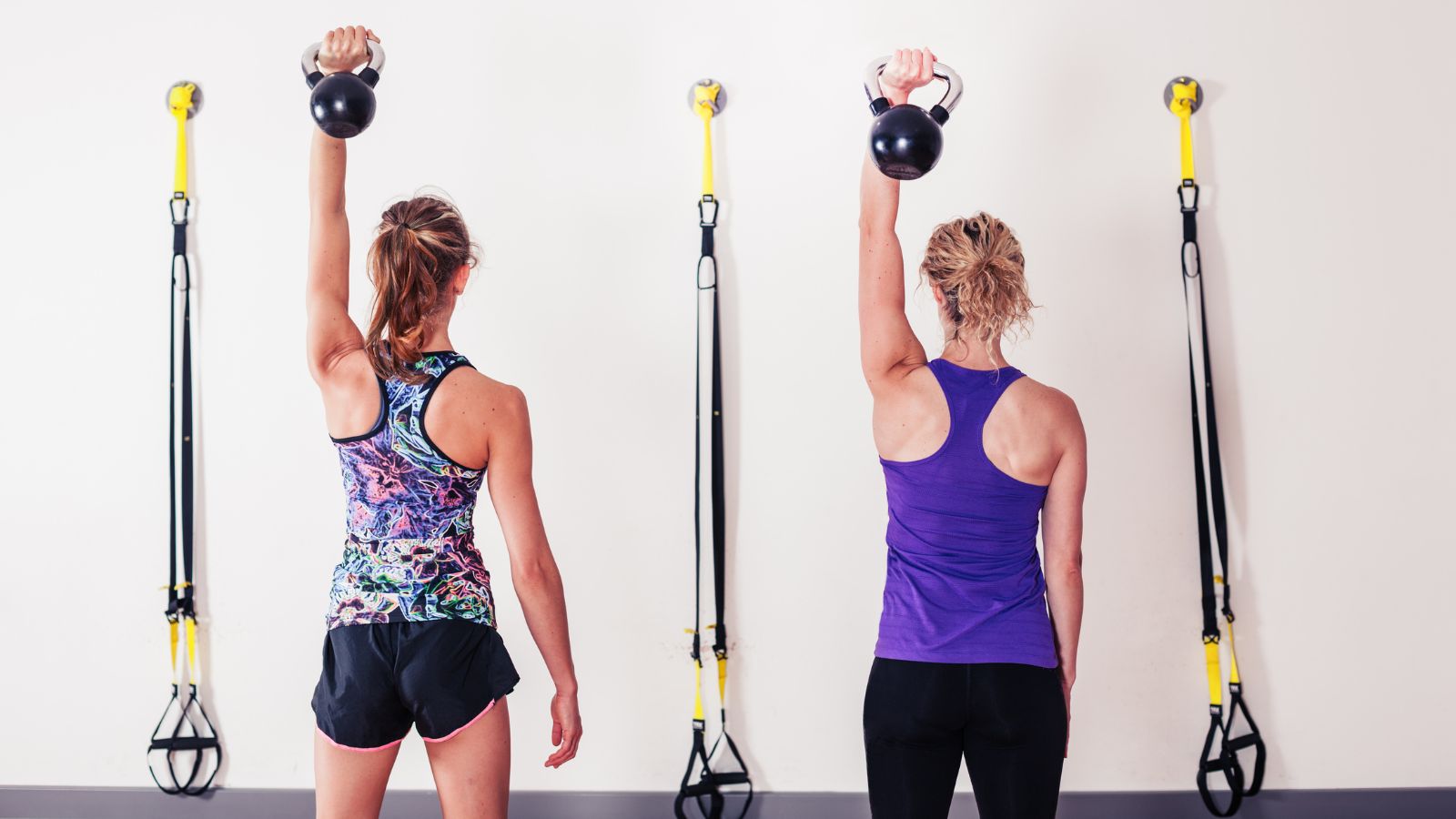
Kettlebell Shoulder Press: For upper‑body strength, the shoulder press is straightforward yet effective. Hold the kettlebell at shoulder height with your palm facing inward, then press it overhead until your arm is straight. Lower slowly to maintain control. This exercise targets the shoulders and triceps while engaging stabilizing muscles, helping you build strength and balance. (Image: Canva)
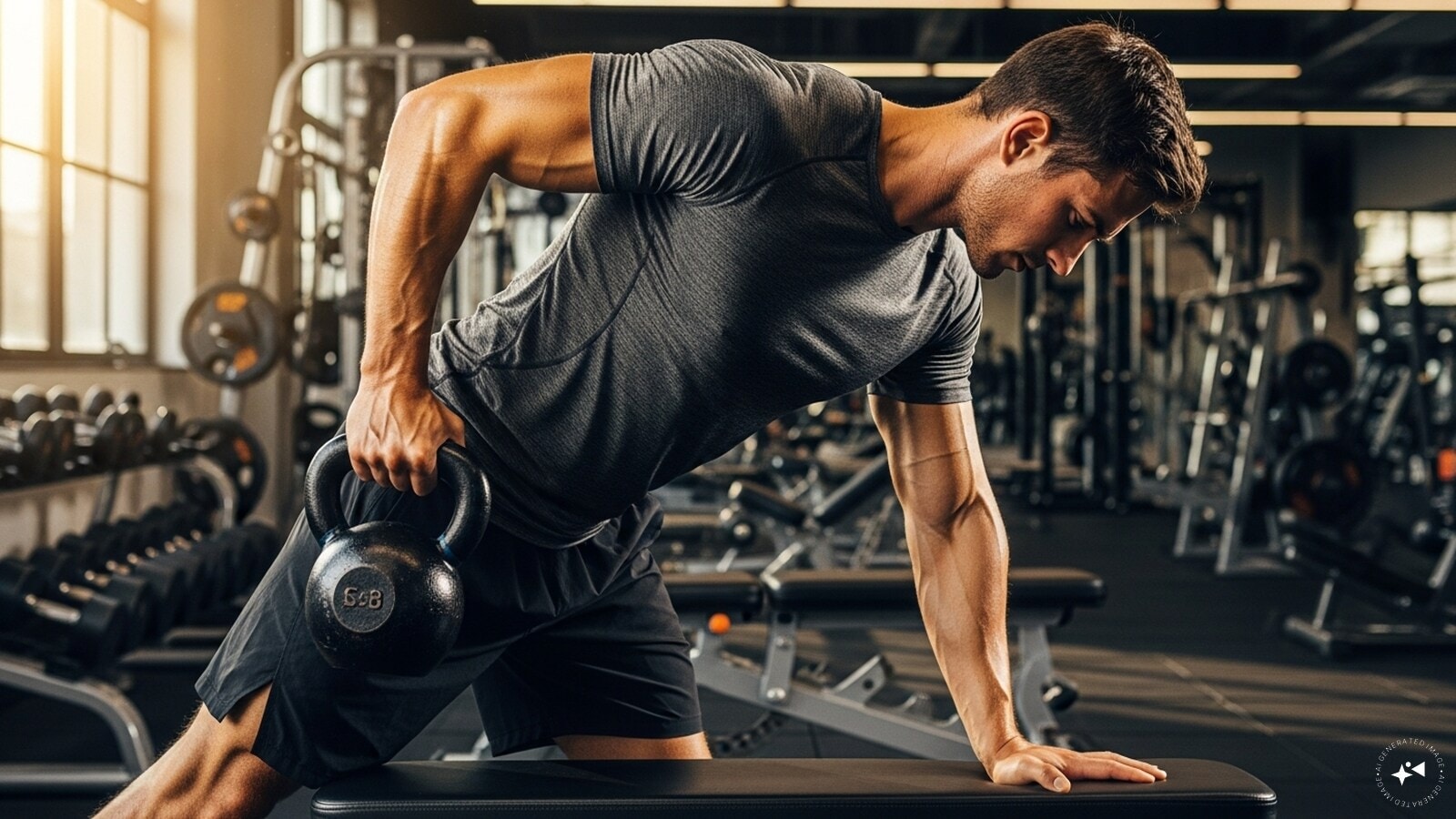
Kettlebell Bent‑Over Row: The bent‑over row is excellent for back and arm strength. With the kettlebell in one hand, hinge forward at the hips and pull the weight toward your ribcage. Lower it back down with control before repeating. This move works the lats and biceps while improving posture, making it especially useful for those who spend long hours sitting. (Image: AI-Generated)
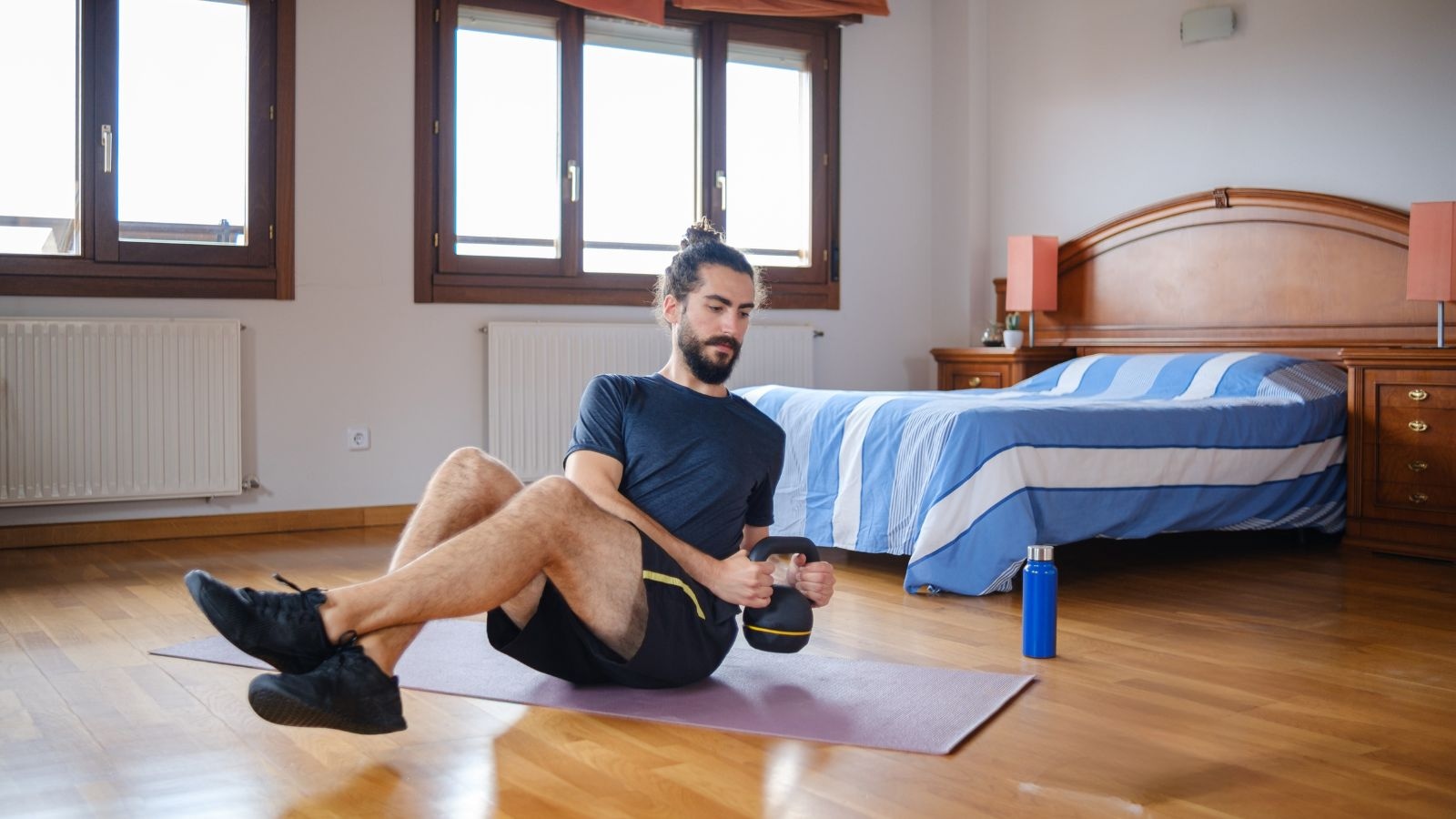
Kettlebell Russian Twist: For core training, the Russian twist adds rotational strength and balance. Sit on the floor, lean back slightly, and hold the kettlebell with both hands. Twist your torso side to side, tapping the kettlebell near your hip each time. This exercise strengthens the obliques and improves rotational stability, which is vital for everyday movements. (Image: Canva)
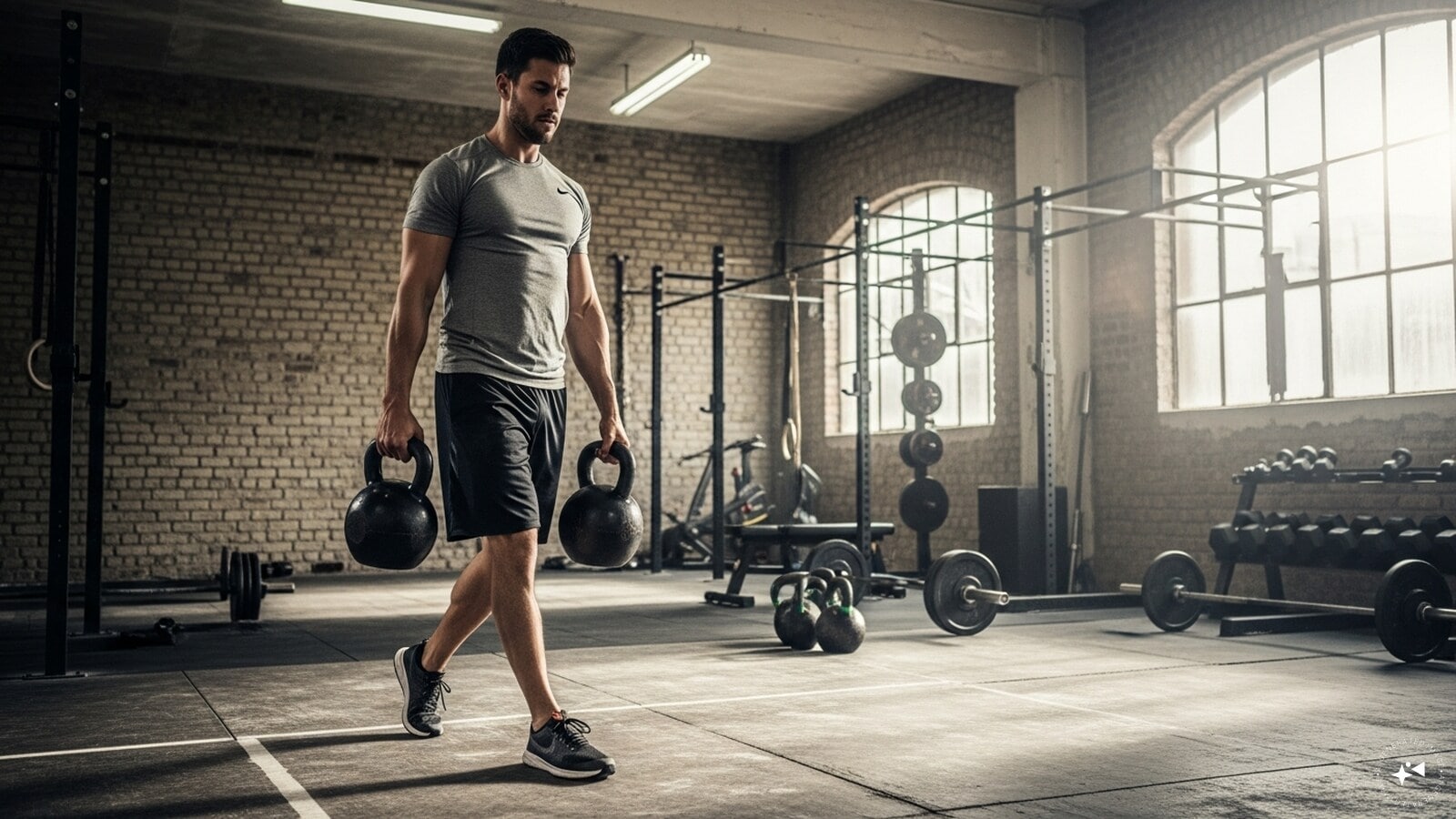
Kettlebell Farmer’s Carry: The farmer’s carry is deceptively simple but highly effective. Hold a kettlebell in each hand at your sides and walk slowly across the room while keeping your posture upright. This exercise builds grip strength, core stability, and overall endurance, making it a functional workout that translates directly into daily life. (Image: AI-Generated)
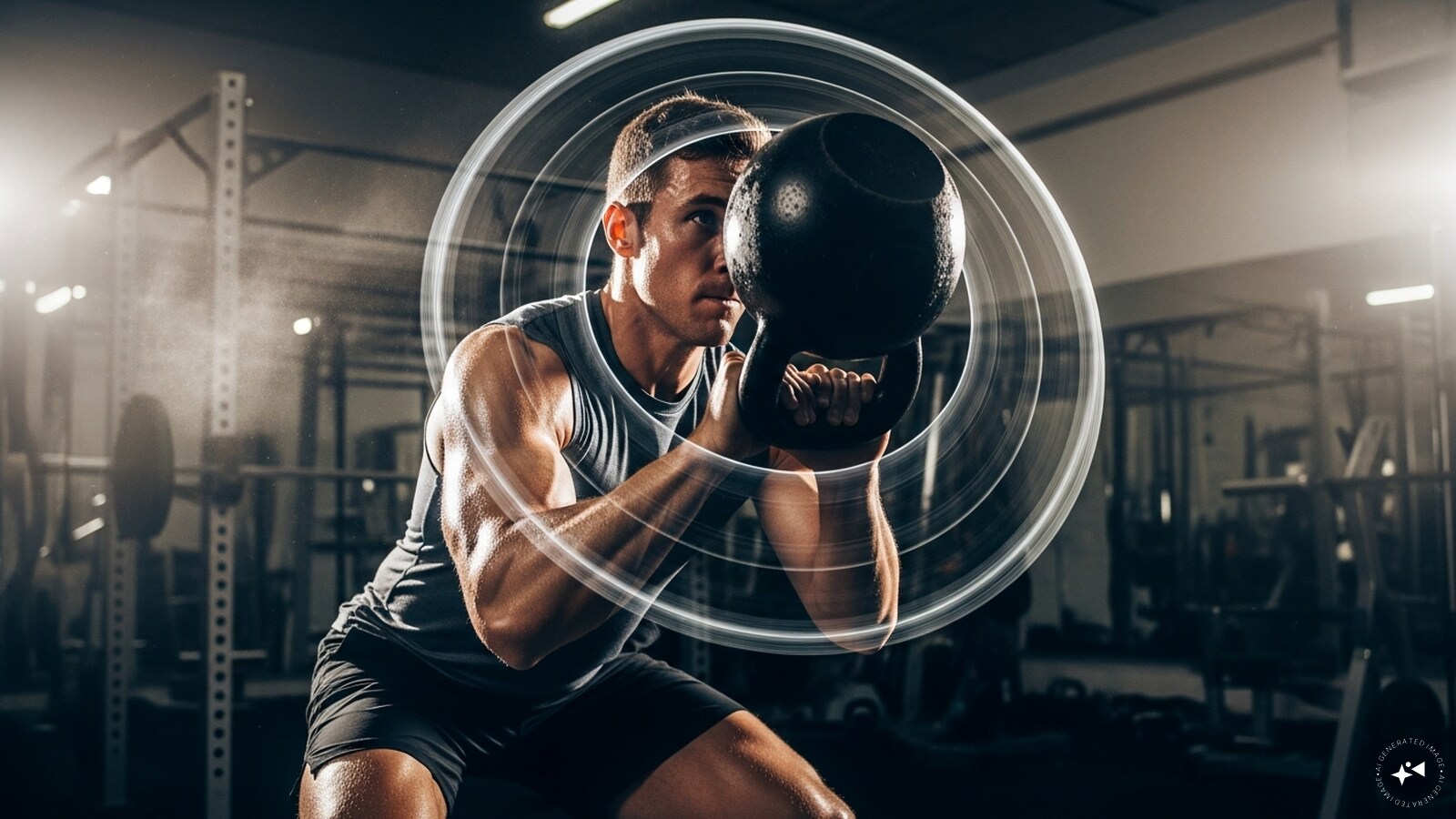
Kettlebell Halo: The halo is a mobility exercise that also strengthens the shoulders. Hold the kettlebell by the horns and circle it carefully around your head in a controlled motion. This move improves shoulder mobility and stability, making it a great warm‑up or accessory exercise. (Image: AI-Generated)
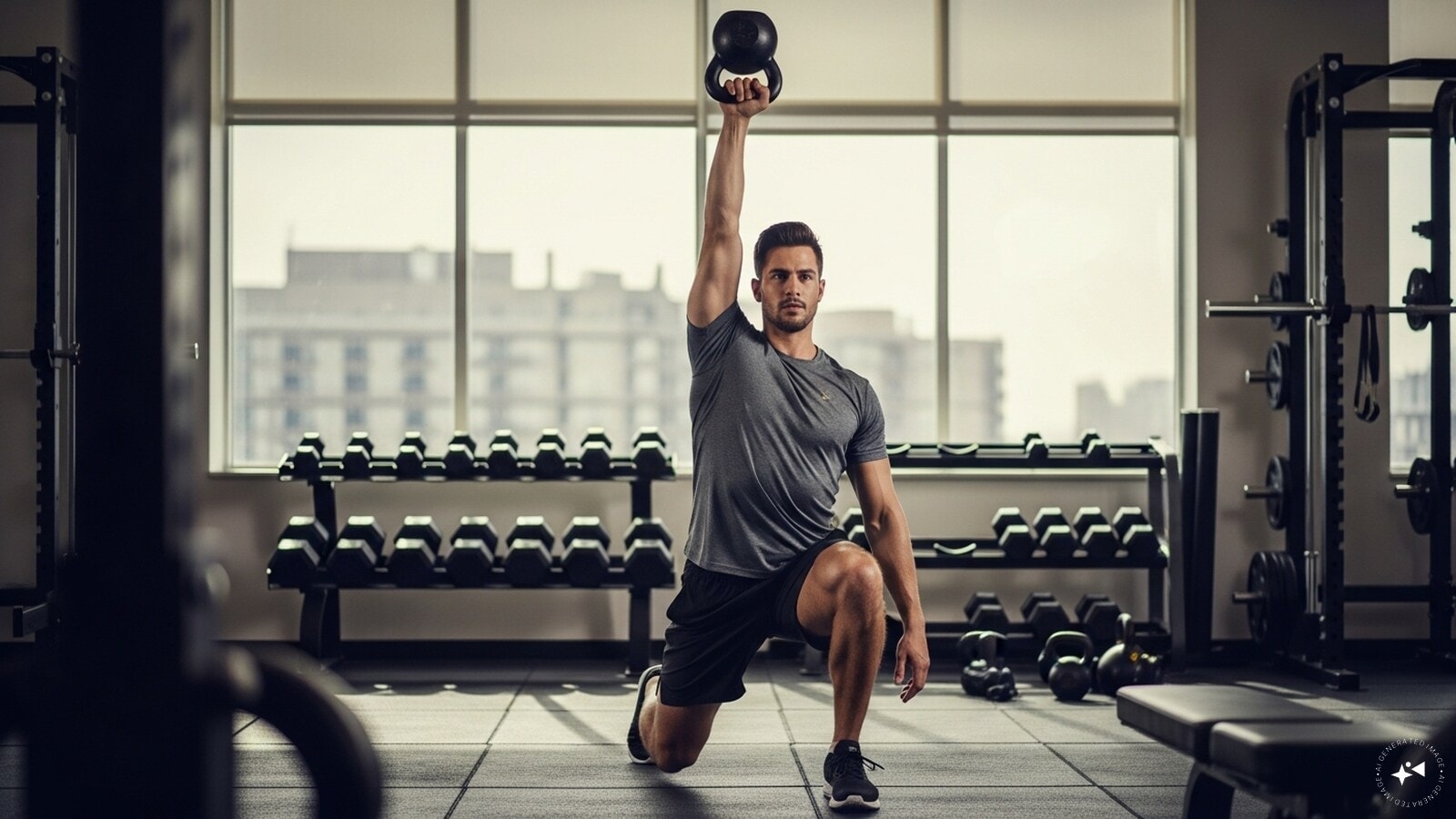
Kettlebell Lunge Press: The lunge press combines lower‑body and upper‑body training in one dynamic move. Step into a lunge while holding the kettlebell at shoulder height, then press it overhead as you rise. This exercise builds coordination, balance, and full‑body strength, making it ideal for those who want efficient workouts. (Image: AI-Generated)
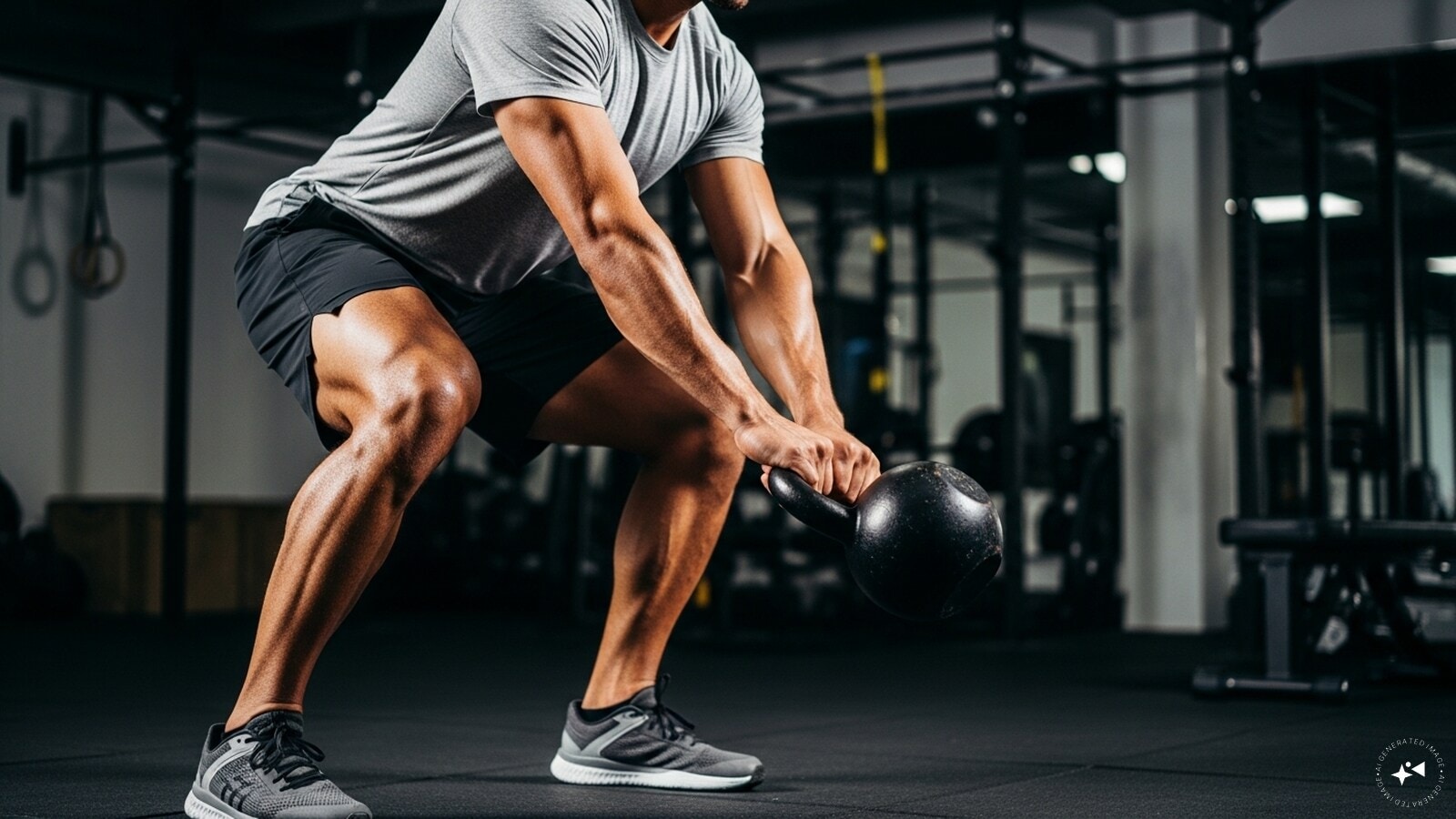
Kettlebell Figure‑8: Finally, the figure‑8 adds agility and core engagement. Pass the kettlebell between your legs in a figure‑8 pattern, switching hands each time. This flowing movement improves coordination, strengthens the core, and challenges grip endurance, all while keeping the workout fun. (Image: AI-Generated)