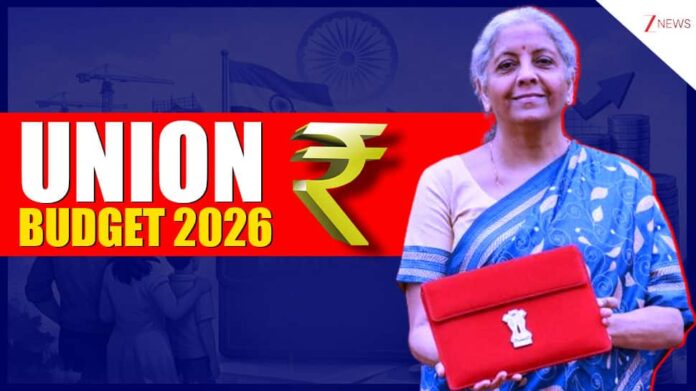
New Delhi: All eyes will be on Parliament on February 1, Sunday, as the government presents Budget 2026. As the country’s annual financial roadmap, the Budget outlines how the government plans to raise revenue and where it intends to spend it in the year ahead. From taxpayers and salaried individuals to businesses, investors and state governments, millions closely watch this announcement for cues on taxes, schemes, growth plans and the overall direction of the economy.
Nirmala Sitharaman to Present Her Ninth Consecutive Budget
The Union Budget 2026–27 will be presented by Finance Minister Nirmala Sitharaman, marking her ninth straight Budget in office. It will also be India’s 88th Budget since Independence. The upcoming announcement is expected to send key signals on tax policies, government spending, fiscal management and overall policy direction, especially at a time when the global economy remains uncertain and India’s growth outlook is under close watch.
Add Zee News as a Preferred Source
Understanding the Union Budget
The Union Budget is the government’s yearly financial plan. It outlines how much money the Centre expects to earn through taxes, dividends, borrowings and other sources and how it plans to spend that money in the upcoming financial year, beginning April 1, 2026. The funds are allocated across key sectors such as infrastructure, defence, welfare schemes, education and healthcare, shaping the country’s economic priorities for the year ahead.
Key FAQs on the Union Budget
1. What is included in the Union Budget?
The Budget has several important parts. It begins with the Budget Speech, where the Finance Minister outlines key announcements, policy measures and tax changes. It also contains detailed tax proposals (such as changes in income tax or GST), spending allocations for each ministry, and overall figures on the government’s income and expenditure. The speech is usually the most closely watched segment.
2. What are the main components of the Budget?
Broadly, the Budget is divided into two sections, the Revenue Budget and the Capital Budget. The Revenue Budget deals with day-to-day income and expenses, including tax collections and subsidies. The Capital Budget focuses on long-term investments such as building infrastructure and creating assets, along with capital receipts like borrowings and disinvestment proceeds.
The documents also provide key indicators like fiscal deficit, revenue deficit and primary deficit, which reflect the government’s financial health.
3. Why is the Budget presented on February 1?
Since 2017, the Union Budget has been presented on February 1 instead of the last working day of February. This change was made to give ministries enough time to roll out new schemes and spending plans from the start of the financial year on April 1, reducing implementation delays.
4. What happens on Budget Day?
On February 1, the Finance Minister delivers the Budget speech in the Lok Sabha, outlining major announcements and priorities. After the speech, detailed Budget documents are tabled in Parliament and released to the public.
5. What happens after the Budget is presented?
Following the presentation, Parliament debates the proposals. Ministries seek approval for their spending through Demands for Grants, and the Finance Bill — which includes tax changes — is discussed and passed. Once approved, the new tax rules and spending plans usually come into effect from April 1.
6. How does the Budget affect common people?
The Budget can directly impact your income tax, GST on goods and services, and prices of items such as petrol, diesel or gold. It may also introduce new schemes for farmers, students or homebuyers. Large spending on infrastructure and jobs can influence employment opportunities and overall market conditions.